
Community
Texas EquuSearch asks Sugar Land neighbors to check cameras for missing man
By Lila Mendez
Advertisement · Why this ad?
David has a background in sports journalism from Sam Houston State University, where he also served as editor of the university newspaper. Over the past 5 years, he has reported on youth sports leagues in Southeast Texas, showcasing the passion of young athletes.
More from David →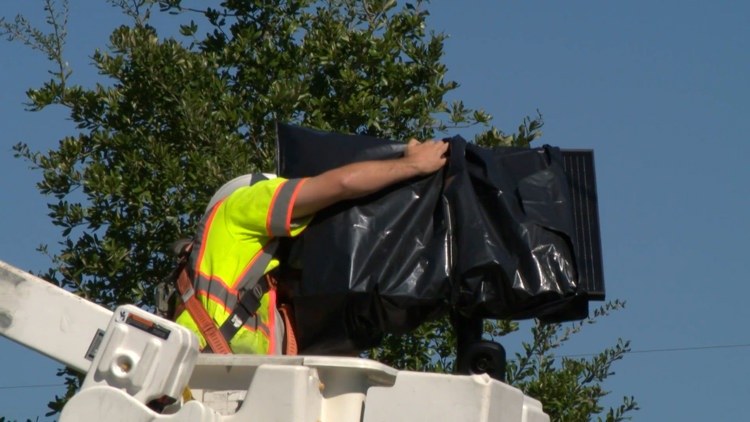
Under the bright Texas sun, a quiet but significant shift is unfolding in League City—a community known for its strong family values, vibrant local culture, and a deep-rooted commitment to safety. On a recent Thursday morning, public works crews, equipped with ladders, tools, and a sense of purpose, rolled out to carefully remove 55 Flock cameras from key roadways and intersections. This decisive action follows a community-wide referendum where residents voiced their concerns about automated license plate readers (ALPRs) and the broader implications of surveillance technology. The move underscores a community that deeply values privacy, transparency, and the preservation of individual freedoms amid modern security concerns.
In a clear demonstration of local democracy in action, League City voters rejected the continued use of ALPR technology, which includes the Flock cameras installed along busy streets and arterials. These cameras, which automatically capture license plates to assist law enforcement agencies in identifying stolen vehicles, wanted persons, and other criminal activity, had been part of the city’s broader efforts to enhance public safety and reduce crime rates. However, in a community where faith, family, and personal privacy are held sacred, residents expressed apprehension about the potential for overreach, data misuse, and the erosion of civil liberties.
The decision to remove the cameras was reinforced when city officials announced that the devices would be decommissioned and physically taken down. The effort was swift; early Thursday morning, crews arrived, carefully bagging and dismantling each camera. This action marked a significant turning point in League City’s approach to surveillance technology, emphasizing community input, local values, and the importance of respecting individual rights. It also reflects a broader national debate about the balance between security and privacy, especially in suburban communities that have historically prioritized personal freedoms.
Many residents see the removal as a victory for personal privacy and civil liberties, especially in a city that prides itself on its family-centered and faith-based community. “We want to feel safe, but not at the expense of our freedom,” said longtime resident Maria Lopez, a mother of four who has lived in League City for over two decades. “This decision shows that our voices matter and that our community’s integrity is worth protecting.”
The vote was driven by a broader conversation about the delicate balance between security and civil liberties—a debate playing out across many American suburbs and small towns. Community leaders, law enforcement officials, and residents engaged in town hall meetings, social media discussions, and grassroots organizing efforts to voice their concerns about how surveillance technology might infringe upon their rights.
League City’s residents, many of whom are deeply rooted in their faith and family traditions, expressed fears that such cameras could be misused or lead to unwarranted surveillance of innocent citizens. Some community members shared stories about how increased surveillance might discourage outdoor activities or community gatherings, fearing they could be watched or judged based on data collected without proper oversight.
Local leaders, including Mayor John Doe, emphasized that safety remains a priority but not at the expense of community trust. “Our residents have spoken clearly, and we respect their wishes,” Mayor Doe stated. “We will explore other, less intrusive ways to keep our streets safe—methods that align with our community’s values and faith-based principles.” The decision underscores a community that values strong marriages, close-knit families, and a shared sense of moral responsibility, believing that trust and transparency are the foundation of a thriving neighborhood.
League City, situated along the Gulf Coast within the Houston metropolitan area, has experienced rapid growth over the past two decades. Originally established as a small fishing and farming community, it has transformed into a bustling suburban hub with a diverse population of families, retirees, and young professionals. The city’s population has grown by over 40% since 2000, leading to increased development and a need for enhanced safety measures.
However, this growth has also brought challenges—traffic congestion, crime, and the need for modern infrastructure. The installation of Flock cameras was part of a broader effort to address these issues, with the city’s police department advocating for technological solutions to improve response times and crime-solving capabilities.
Local law enforcement officials argued that the cameras were vital tools in reducing vehicle thefts, stolen property, and other crimes. Yet, community members voiced concerns about the potential for these devices to be misused or to create a surveillance state that could infringe on their constitutional rights. The debate reflected a larger tension in League City and similar communities, where growth and modernization must be balanced with preserving the community’s core values.
Community leaders, including the League City Police Chief, have been vocal about their commitment to safety but also to respecting residents’ privacy. Chief Mark Johnson stated, “Our goal is to keep everyone safe without compromising the trust that makes League City special. We’re eager to find solutions that work for everyone, not just for enforcement.”
With the cameras gone, the city now faces the challenge of finding innovative, community-approved solutions that uphold public safety without infringing on residents’ privacy. City officials have announced plans to review and implement alternative crime prevention strategies, including increased community patrols, neighborhood watch programs, and enhanced street lighting. These initiatives aim to foster a sense of security rooted in genuine relationships, community engagement, and faith-based principles.
Furthermore, League City is expected to hold a series of public forums in the coming months—inviting residents, faith leaders, law enforcement, and local organizations to collaboratively discuss future safety strategies. These forums will serve as platforms for transparent dialogue, ensuring that community voices continue to shape policy decisions.
The community’s stance on surveillance reflects a broader desire to preserve the American dream—homes built on stability, strong marriages, and unwavering faith. It’s a reminder that technology should serve, not dominate, the fabric of our neighborhoods. League City’s decision may serve as a model for other communities grappling with similar issues, emphasizing that local voices can influence the adoption and rejection of surveillance measures.
As League City moves forward, residents and officials alike hope that this decision will foster a renewed sense of safety rooted in faith, family, and community. It’s a story of how listening to the people can lead to meaningful change—one that champions the core American ideals of freedom, responsibility, and unity. The community’s resilience and commitment to its values demonstrate that even in an increasingly digital world, human connection and trust remain paramount.
By Lila Mendez

By Laura Gonzalez

By David Nguyen
By David Nguyen